When
Shipping
Meets AI
A matchmaker's notes after 15 years
Dr. CAO Xinhu, JuanitaInnerDrive StudioFounder & AI Systems Architect

Why does smart AI feel useless in shipping?
Great at talking. Not yet at your work.
Doesn't know our data, context or domain.
???I don't have access to live port data.
It doesn't understand voyage operations.
It can't read our contracts or reports.
It doesn't know maritime terms.
The data is outdated and not specific to us.

Can't make reliable, actionable decisions.
???It gives options but no clear recommendation.
It's not confident and keeps hedging.
It ignores real-world constraints.
It looks good, but doesn't say what to do.
It misses cost, risk trade-offs.
I still have to make the decision myself.

Can't connect to systems or execute tasks.
???It can't create tasks in our TMS / ERP.
It can't send emails or alerts to my team.
It doesn't update our dashboards or reports.
It can't trigger actions with partners.
It can't monitor and follow up automatically.
In the end, nothing actually gets done.


Your turn
What grunt work
would you love AI
to take off your plate?
Think of something that is…

Code: 2919636
Scan, then share your idea
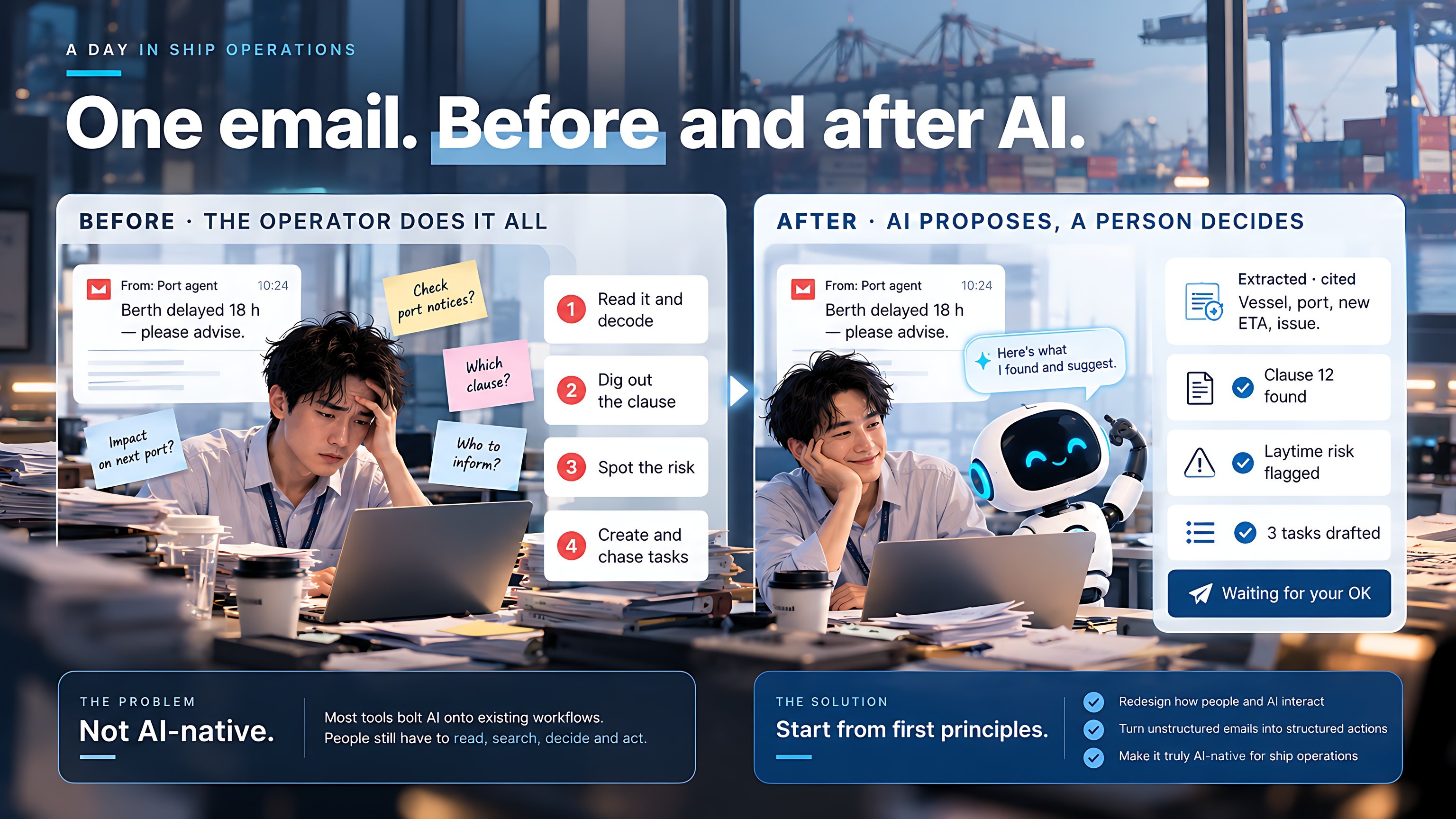
The problem
Not AI-native.
Most tools bolt AI onto existing workflows.
People still have to read, search, decide and act.
The solution
Start from first principles.
- Redesign how people and AI interact
- Turn unstructured emails into structured actions
- Make it truly AI-native for ship operations
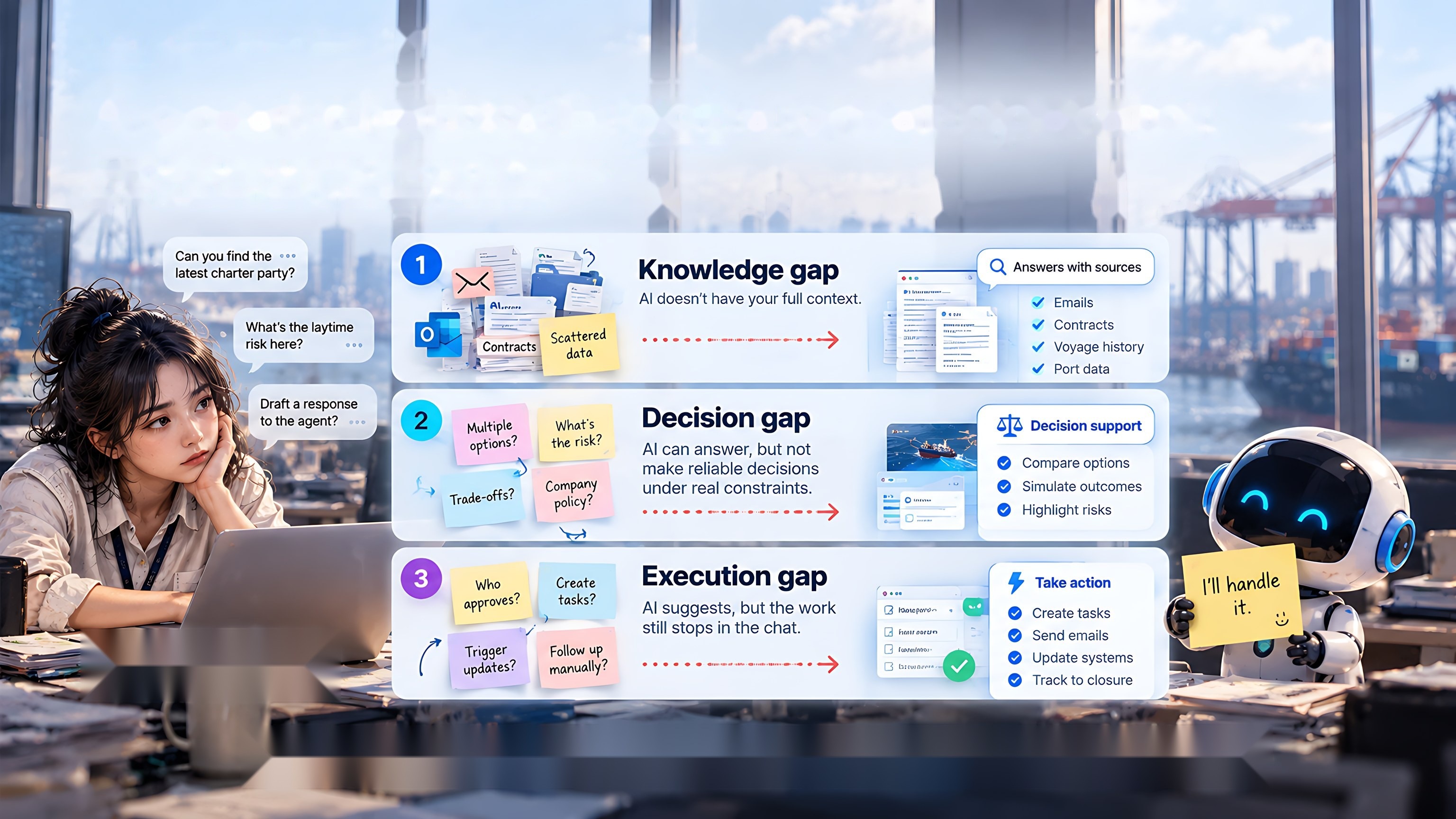
3 gaps between a great chatbot and a great operator.
Today’s SaaS with a chatbot helps you find answers,
but an AI-native SaaS is designed to operate.
Why chatbots fall short
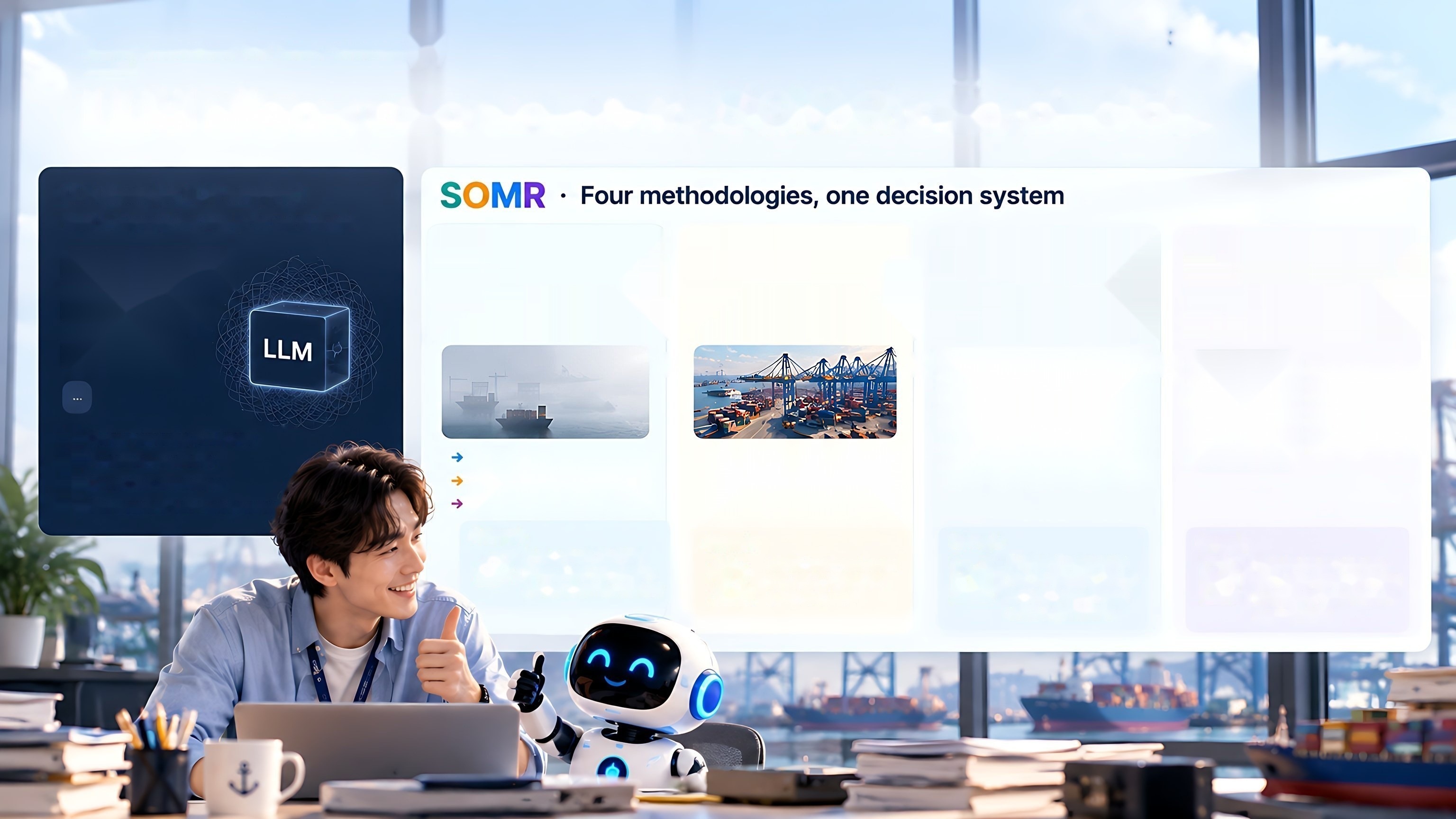
AI is more than LLMs.
Simulation and optimization grew in parallel, from operations research.
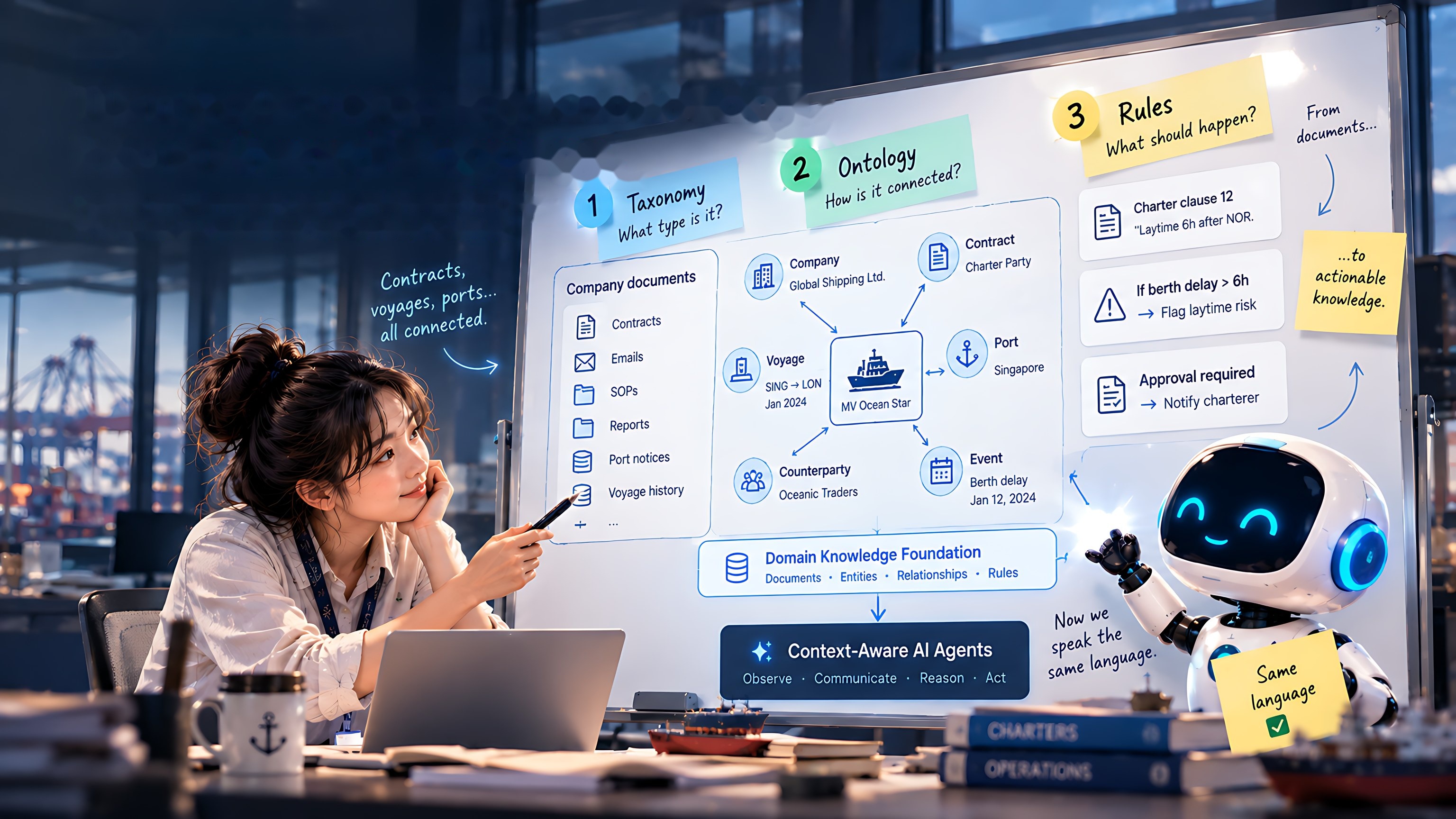
Turn your company knowledge
into a shared language.
Organize your documents, entities, relationships and rules
so AI agents can understand your business in context.
LLM alone (or LLM wrapper)
Good at language. Not enough for real decisions.
When will this vessel berth?
What is the best plan?
Is this compliant?
Opaque reasoning (black box)
No domain constraints
Cannot test alternatives
Often generic or hallucinated
LLM alone can answer. SOMR can decide.
Visibility drops
Slower vessels
Port traffic
Vessel rotation
Crane allocation
Berth scheduling
Clause check
Port rules
Contract terms
Safety limits
Simulation
What if?
Explore possible futures
and test scenarios.
Optimization
What is best?
Find the best plan under
real constraints.
Machine Learning
What will happen?
Learn from historical data
to predict key outcomes.
Rule-Based Reasoning
What must hold?
Apply business rules,
regulations and contracts.
Example
Haze rolls in. Visibility
drops. How are vessels
and port traffic affected?
Example
Which berth and crane
allocation minimizes
delay and cost?
Example
Predict time to berth
and laytime risk based
on past voyages and
current conditions.
Example
Check charter clauses
and port rules. Is the plan
compliant? What actions
are required?
Why chatbots fall short
Four methods. Four questions.
What if?
A typhoon arrives. What happens to the port?
What is best?
How should trucks and equipment be scheduled?
What will happen?
When is this vessel likely to berth?
What must hold?
Which rules and limits can never be broken?
A practical engineering grouping, not an exhaustive academic taxonomy.
Why chatbots fall short
One hammer. Every problem a nail?
Different problems need different tools.
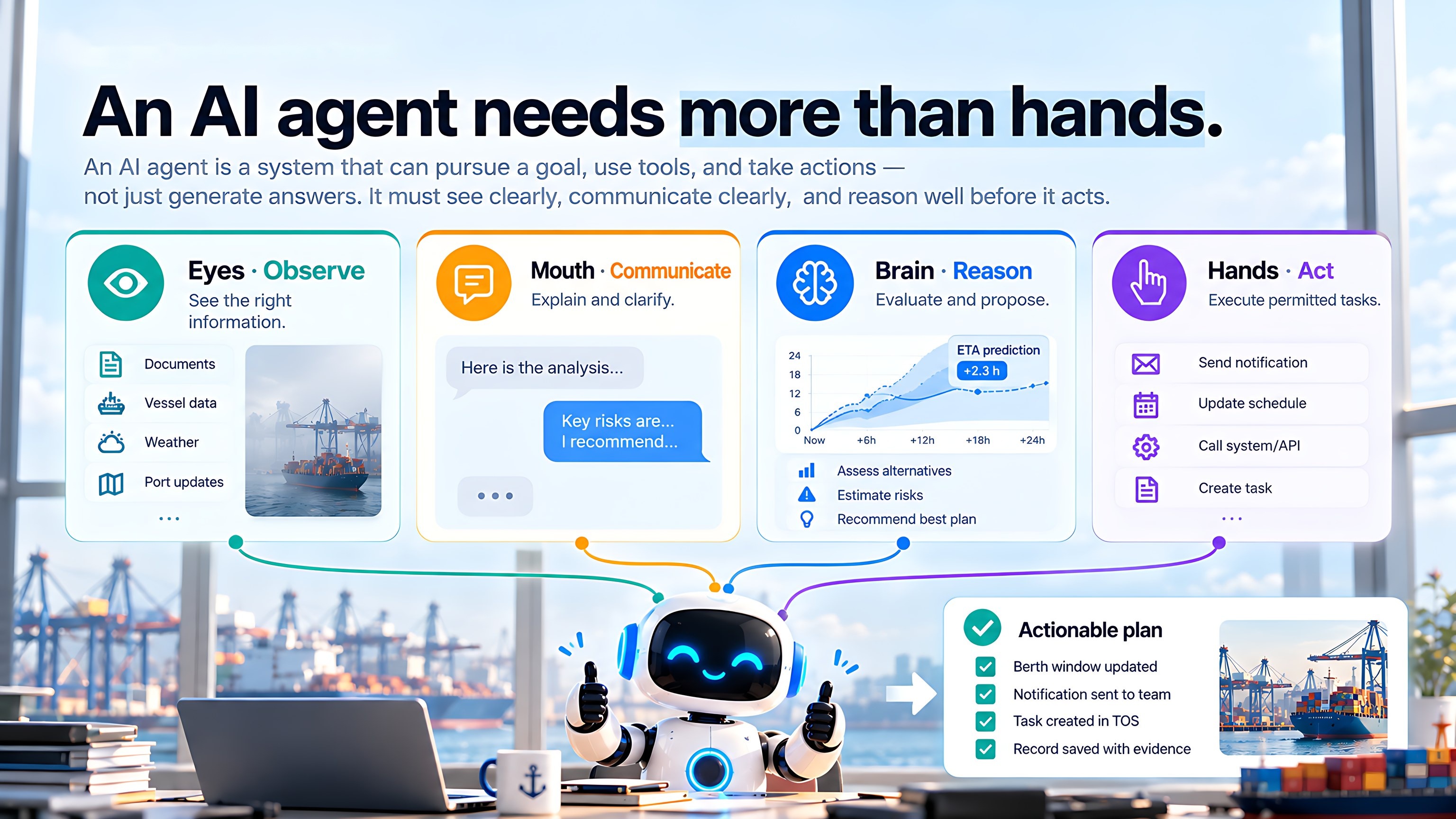
Agents that actually work
An answer is not a result.
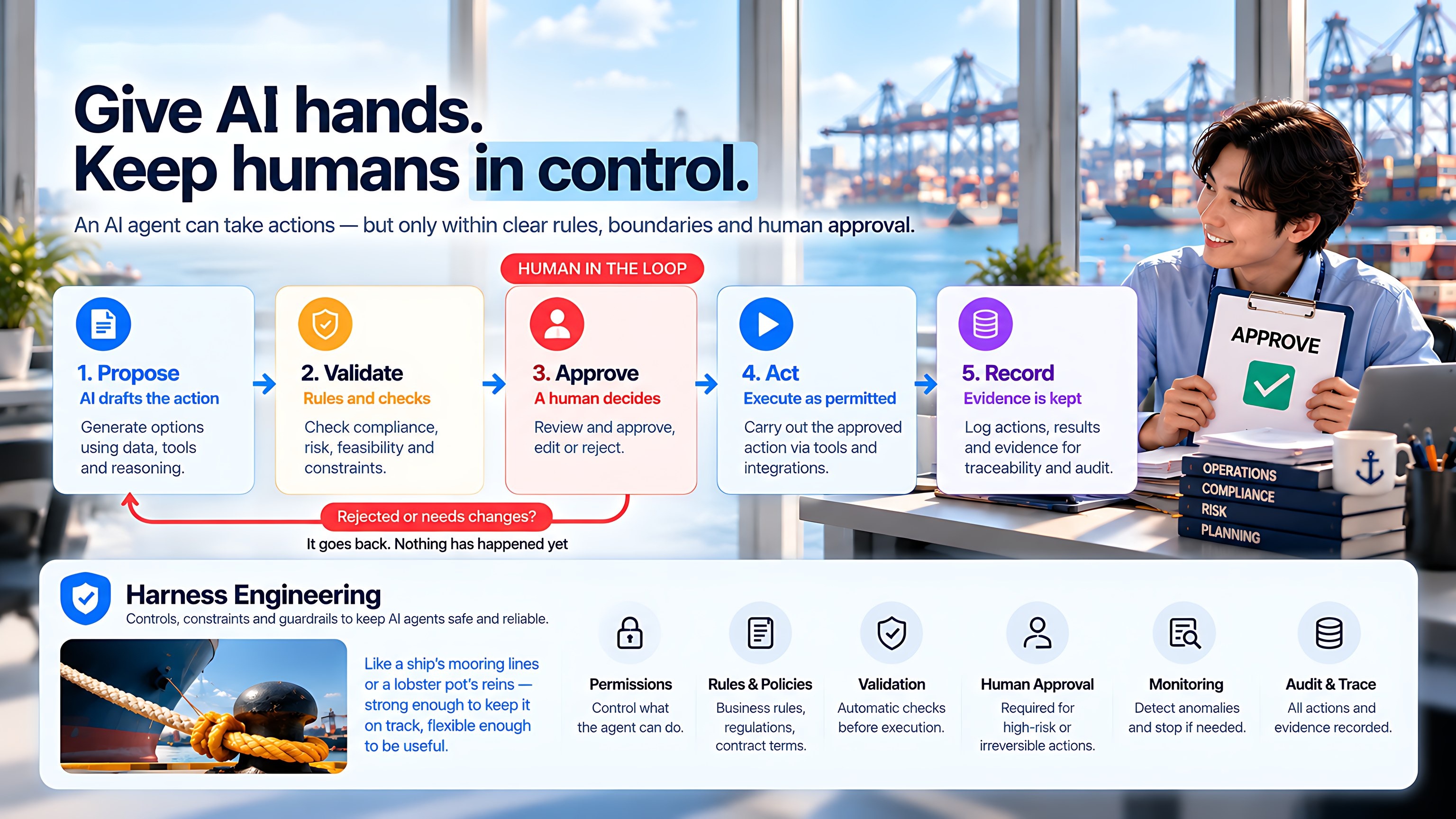
More demos · Cargo
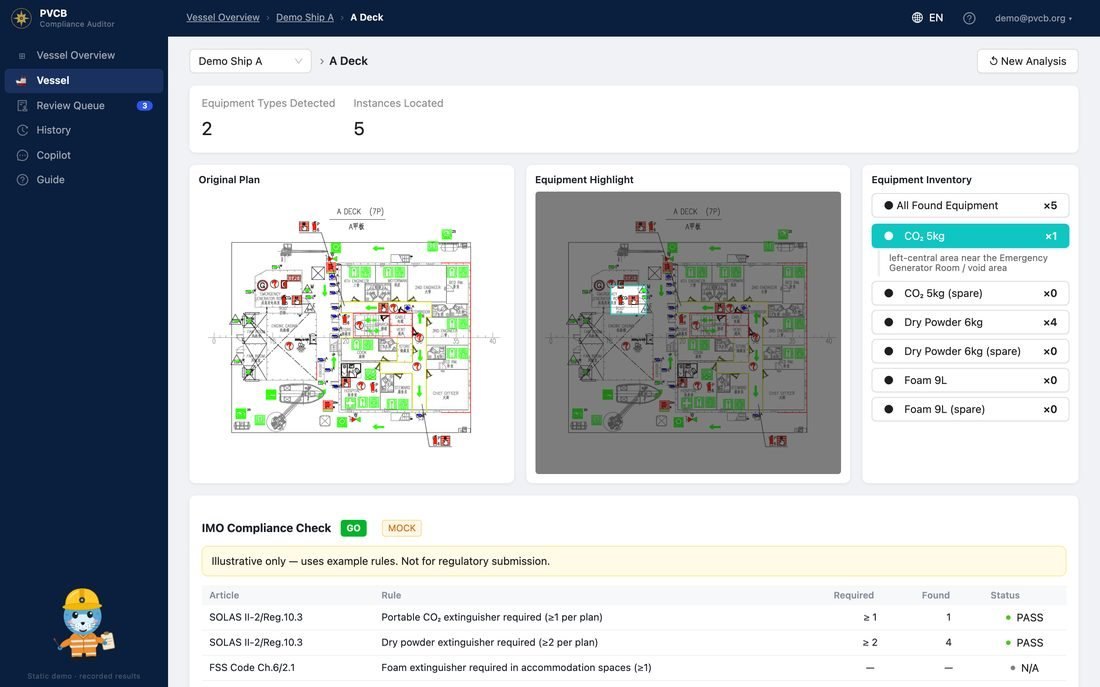
Every rule gets a verdict, with the evidence.
Deck-plan compliance review for human sign-off.
- Finds fire-safety equipment on the plan
- Click to locate the evidence
- Per-rule verdicts for a reviewer
More demos · Cargo
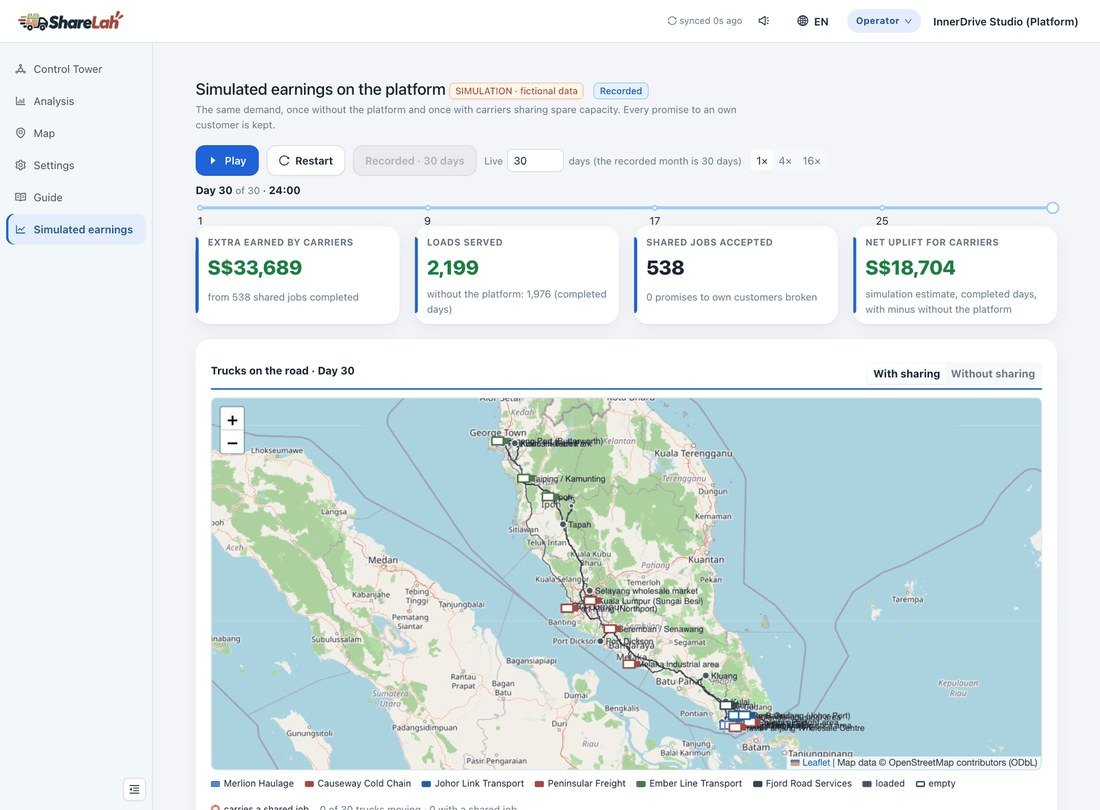
Spare truck space meets shipping demand.
A shared-freight platform, shown on a simulated month.
- Matches spare capacity with loads
- Shippers compare shared and dedicated options
- Earnings shown are simulated
 Open the live demoOpen the live demoOpen the live demoOpen the live demoOpen the live demoOpen the live demo
Open the live demo
See everyone’s ideas
SHIPPrototypeShipping Operation AI Copilot
SERVICESPrototypeCharter Quote Copilot
CARGOPrototypeContainer Truck VRP
CARGOPrototypeShareLah
SHIPPrototypeShip-plan Compliance Auditor
PORTPrototypePort Typhoon Simulator
SHIPPrototypeAIS Navigation Copilot
Maritime AI Workspace
Open the live demoOpen the live demoOpen the live demoOpen the live demoOpen the live demoOpen the live demo
Open the live demo
See everyone’s ideas
SHIPPrototypeShipping Operation AI Copilot
SERVICESPrototypeCharter Quote Copilot
CARGOPrototypeContainer Truck VRP
CARGOPrototypeShareLah
SHIPPrototypeShip-plan Compliance Auditor
PORTPrototypePort Typhoon Simulator
SHIPPrototypeAIS Navigation Copilot
Maritime AI Workspace
One workspace. Ship, cargo, port, services.
Your problem is next Demo data sources and limitations are disclosed on each project page.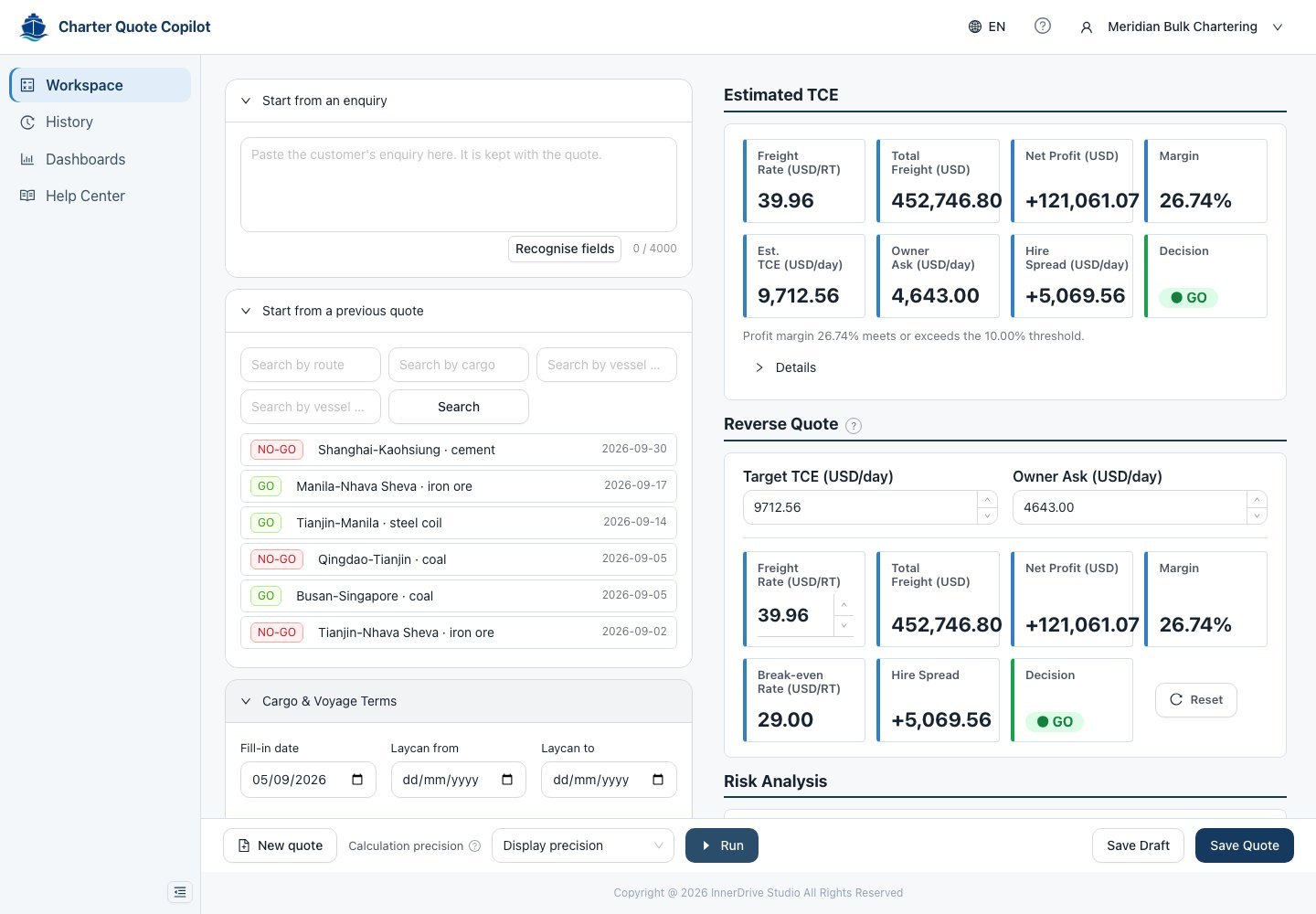
More demos · Ship
Quote, risk and go / no-go on one screen.
Supports chartering decisions; a person decides.
- TCE analysis and freight quotation
- Commercial risk check
- Negotiation sandbox
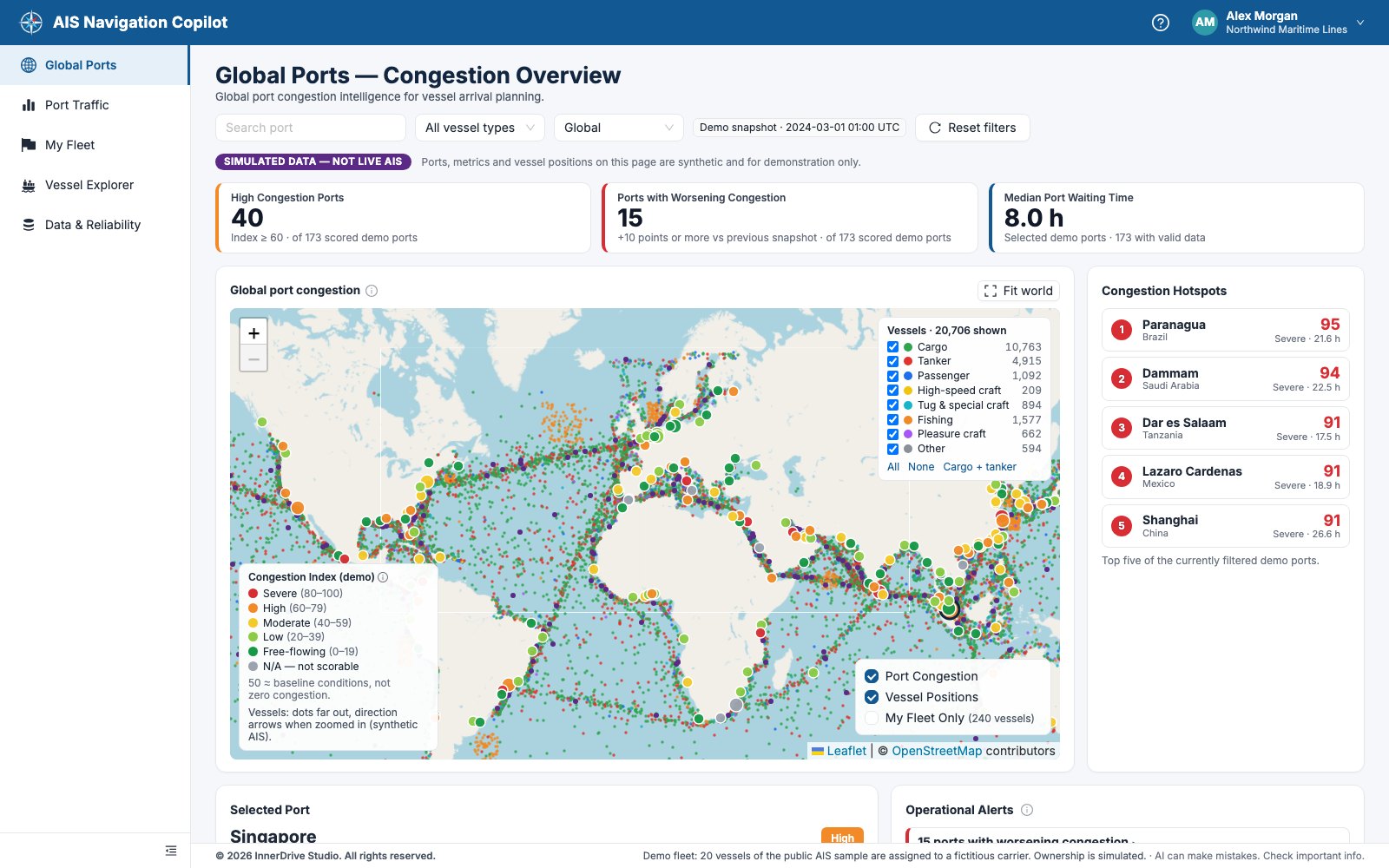
More demos · Port
From AIS tracks to berth readiness.
Arrival prediction, vessel replay and voyage scenarios.
- Port congestion overview (this page: synthetic data)
- Berth-readiness prediction from public AIS history
- Models are provisional; limits shown in the app
Let’s connect
Let’s build what comes next.
Maritime AI · Decision Engineering · Research to Application